
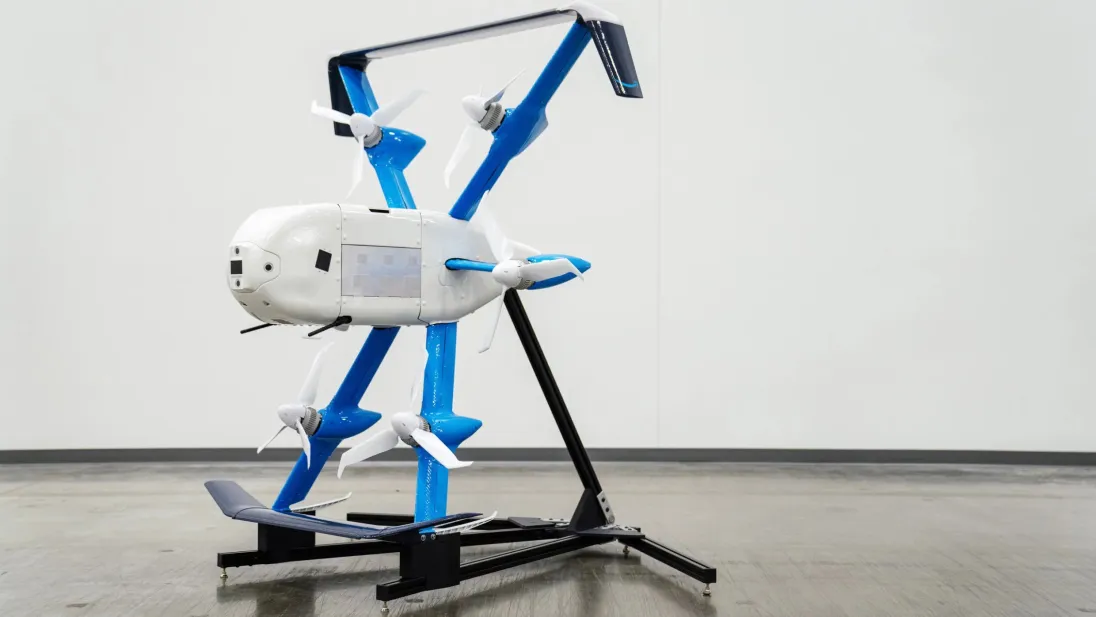
Amazon’s Delivery Drone Ambitions: A Dream Grounded by Reality
When Amazon first unveiled its vision for delivery drones in December 2013, it painted an image of a future where packages would be delivered to customers’ doorsteps in under 30 minutes. Dubbed “Prime Air,” the program promised to revolutionize e-commerce and logistics, turning science fiction into reality. Fast forward over a decade, and the ambitious project is plagued with setbacks, technical challenges, regulatory hurdles, and mounting skepticism. Once seen as a cutting-edge initiative, Amazon’s drone delivery project is now regarded by many as a cautionary tale of overpromising and underdelivering.
Lofty Promises and Early Hype
Amazon’s founder, Jeff Bezos, unveiled the drone program on “60 Minutes,” capturing the public’s imagination and positioning Amazon as a futuristic innovator. The idea of autonomous drones zipping through neighborhoods carrying packages was both thrilling and audacious. In the years that followed, Amazon poured billions of dollars into research and development, acquiring robotics companies, hiring top-tier engineers, and building specialized testing facilities. The company showcased flashy prototypes and announced test flights in the U.S., the U.K., and other countries.
The Reality Check: Technical and Logistical Challenges
Despite the initial excitement, Amazon’s drone delivery program has been hampered by a series of technological and operational hurdles. For starters, creating a fully autonomous drone capable of navigating complex urban environments, avoiding obstacles, and delivering packages safely has proven far more challenging than anticipated. Issues like battery life, payload limitations, and noise pollution have further complicated the equation.
For instance, Amazon’s drones can only carry lightweight packages, which limits their utility. Even more troubling, the drones have faced reliability issues, with reports of crashes and malfunctions during test flights. The FAA’s stringent regulations around drone safety, airspace integration, and pilot certification have added another layer of complexity, causing delays in obtaining approvals for widespread deployment.
Internal Turmoil and Leadership Struggles
Amazon’s internal operations haven’t fared much better. Reports from employees and insiders have painted a picture of chaos within the Prime Air division. High employee turnover, shifting priorities, and unrealistic deadlines have plagued the project. In 2021, several media outlets reported that Amazon’s drone program was struggling to meet its goals, with some employees describing the workplace culture as dysfunctional.
Adding to the woes, Amazon’s relationship with regulators and local governments has been rocky. Negotiations over flight permissions and operational guidelines have often stalled, with authorities citing safety concerns and public pushback.
Limited Rollouts and Diminishing Confidence
In recent years, Amazon has launched limited drone delivery trials in select locations, such as Lockeford, California, and College Station, Texas. However, these programs have failed to make a significant impact. According to reports, the actual number of drone deliveries completed has been minimal, falling far short of expectations. Meanwhile, competitors like Wing (owned by Alphabet) and Zipline have made more substantial progress in drone logistics, particularly in healthcare and rural deliveries.
Amazon confirmed that it voluntarily paused its Prime Air drone deliveries in Texas and Arizona but downplayed the role of a reported crash of two drones in December at an Oregon testing facility as a factor in the decision.
“We’re currently in the process of making software changes to the drone and will be voluntarily pausing our commercial operations on Friday, Jan. 17,” said Sam Stephenson, an Amazon spokesperson, in a statement to GeekWire. “Our services will resume once these updates are completed and approved by the FAA.”
Stephenson added, “The incident that occurred at our Pendleton, OR facility in Dec. 2024 is not the primary reason for our voluntary operational pause. Prime Air continued to deliver to customers safely and within federal compliance until we voluntarily paused the service on Jan. 17.”
Bloomberg reported Friday that two of Amazon’s MK30 drones crashed during flights at the company’s Pendleton, Ore., testing facility, and one caught fire on the ground. “The company later discovered a software issue was to blame, related to the light rain the aircraft were flying through at the time,” Bloomberg reported.
Amazon debuted the MK30 drones in November in the West Valley Phoenix Metro Area of Arizona and College Station, Texas, the two parts of the U.S. where it’s currently making drone deliveries to customers.
“These incidents occurred at our private and closed testing facility, where the purpose of these tests is to push our aircraft past their limits – it would be irresponsible not to do that,” Stephenson said.
He added, “We expect incidents like these to occur in those tests, and they help us continue to improve the safety of our operations. Our commercial operations with the MK30 drone have been conducted safely and in compliance with all FAA regulations and requirements.”
Stephenson described safety and compliance as a top priority, and said the drone is “designed to safely respond to unknown events in a known way, and the overall architecture of the drone has performed as expected.”
A Costly Experiment
The financial toll of Amazon’s drone project has been staggering. With billions of dollars invested and little to show for it, Prime Air has become a money sink. Analysts have criticized Amazon for failing to conduct realistic feasibility studies before committing to such a grandiose vision. The company’s focus on delivering flashy innovation at all costs has, in this case, backfired.
Lessons Learned
The downfall of Amazon’s delivery drone program serves as a reminder of the challenges of pioneering uncharted territory. While the concept of drone delivery remains appealing, the reality is far more complex than Bezos’ original pitch suggested. Companies venturing into groundbreaking technologies must balance ambition with pragmatism, ensuring that their visions align with the constraints of technology, regulation, and infrastructure.
As Amazon quietly scales back its drone efforts, the future of Prime Air remains uncertain. Whether it can overcome its current obstacles or fade into obscurity as an expensive failure remains to be seen. For now, the project stands as a testament to the risks of overreach in the pursuit of innovation.
image credits: amazon
FAA Fired Thousands of Qualified Individuals During Obama Admin
The Federal Aviation Administration (FAA) has recently come under scrutiny for its hiring policies r…
US Military Blackhawk Collides mid-air with Commercial Plane
Emergency services operate at Gravelly Point, after American Eagle flight 5342 collided with a helic…
ICE Highlights Enforcement Actions Targeting Criminal Aliens in Utah, Nevada, Idaho, and Montana
SALT LAKE CITY — U.S. Immigration and Customs Enforcement (ICE) announced Tuesday the outcomes of re…
Amazon’s Delivery Drone Ambitions: A Dream Grounded by Reality
Amazon’s Delivery Drone Ambitions: A Dream Grounded by Reality When Amazon first unveiled its …
Hughes Fire in Castaic community of LA County Covers over 10,000 acres
Driven by high winds, a fast-moving wildfire exploded to approximately 10,200 acres near the Los Ang…
Unleashing the Future of FPV with DJI O4: A Comprehensive Look at Its Game-Changing Features
When it comes to immersive First-Person View (FPV) experiences, DJI has long been a trailblazer. The…